Every year in Maastricht priceless treasures go on sale, from a jewel-encrusted book of Shakespeare’s poems to a self-portrait by Rembrandt. Louisa McKenzie selects six of the most precious collectors’ items
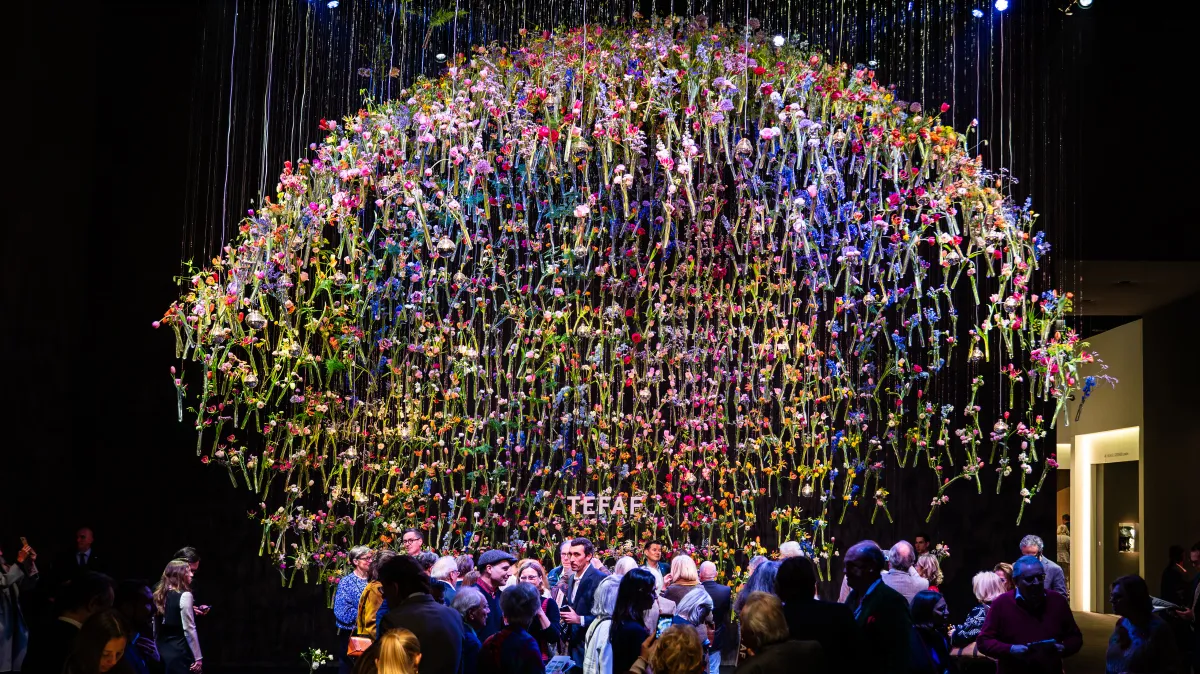
Each spring a quiet Dutch city is transformed into the epicentre of the art world. Tefaf — The European Fine Art Foundation, to give it its full name — is widely regarded as one of the world’s most prestigious art and antiques fairs. Held annually in Maastricht in the Netherlands — this year from March 14 to 19 — the fair will bring together 276 leading dealers from 24 countries across five continents. The objects these dealers have to offer span some 7,000 years of history, from ancient civilisations to contemporary design, making it one of the broadest art market platforms in existence.
About 50,000 visitors are expected to attend the seven-day event, including leading private collectors and curators and museum directors from across the globe. A defining feature of Tefaf is its rigorous vetting process: hundreds of international specialists examine every object for authenticity, condition and quality before it is approved for display.
The treasures that pass through Tefaf are remarkable in variety, rareness and value. Old master paintings, medieval manuscripts, classical antiquities, Renaissance sculptures, antique jewellery and museum-quality furniture are all regular highlights, with works frequently commanding six and seven-figure prices. Many pieces are acquired by big public institutions or become the centrepieces of distinguished private collections, reinforcing the fair’s reputation in the global art market. Here we select six of the most extraordinary pieces it has on sale this year.
Self Portrait Frowning by Rembrandt
This intimate etching from 1630 belongs to a rare group of four self-portraits in which the Dutch master used his own face to explore fleeting emotional states. Here, Rembrandt captures a moment of vexation (something we can all identify with), transforming his own demeanour into an expression of psychological depth. Printed in an early second state, before two horizontal lines were removed from the plate, the impression retains remarkable richness and delicacy. Subtle plate tone fills the background with atmosphere, while careful wiping of the face heightens dramatic contrasts between light and shadow. “Light-dark contrasts emerge clearly, supporting the dramatism of the facial expression, designed to express vexation, most beautifully,” the specialist Dr Michael Weis says. Though small in scale, the work is technically ambitious: etched line and surface tone are manipulated with extraordinary sensitivity, creating a vivid sense of presence.
Rare cabinet by Carlo Zen
“The two-part cabinet by Carlo Zen is inspired by Japanese aesthetics. The proportions of this piece are extraordinary, creating such a perfect balance of forms that it transcends its function as furniture and becomes a sculptural work within the space,” explains Rossella Colombari, the founder of the eponymous gallery presenting the item. Crafted in 1902, this rare double-body cabinet exemplifies Carlo Zen’s distinctive interpretation of liberty — the Italian variant of art nouveau. Made from walnut and enriched with mother-of-pearl inlays and fine brass threading, the cabinet merges Lombard restraint with turn-of-the-century elegance and subtle Japanese influence. Its elongated proportions and carefully balanced solids and voids create a refined architectural presence, with the delicate decorative details lending warmth and sophistication. Rare and beautifully preserved, this cabinet stands as a testament to Zen’s personal decorative language and his contribution to early modern Italian design.
Jeune fille au chien by Berthe Morisot
Painted in 1892, Jeune fille au chien marked a watershed moment in Berthe Morisot’s life and career. Created during a year shaped by both professional recognition and personal loss, the work reflects a period of artistic reinvention following the death of her husband, Eugène Manet. “It is so rare to see such a radiant masterwork by Berthe Morisot at this large scale. Exhibited around the world, this celebrated work was painted in perhaps the most pivotal year of Morisot’s life, and captures one of her favorite models, Jeanne Fourmanoir, in Morisot’s own lush gardens in Paris,” says the senior researcher and curator Marjorie Rawle. Set in Morisot’s garden, the hazy atmosphere and dreamlike quality exemplify Morisot’s late style, where form dissolves into light and emotion. Subtle colour harmonies and fluid gestures convey intimacy rather than spectacle, revealing Morisot’s sensitivity to private moments. Long celebrated as a pioneering impressionist and groundbreaking female artist, Morisot here demonstrates her mature voice: contemplative, lyrical and deeply personal.
Statuette of Ptah-Sokar-Osiris
This painted wooden statuette, dating to the Ptolemaic period, represents the composite funerary deity Ptah-Sokar-Osiris, and unites the ideas of creation, death and resurrection. The mummiform figure wears a tall crown of twin plumes flanking a solar disk, with curved ram’s horns symbolising divine power. A gilded face rests above a polychrome usekh collar, while painted bandages bear hieroglyphic inscriptions. Mounted on a base decorated with alternating ankh (life) and djed (stability) symbols, the figure also features the protective falcon Sopdu, guardian of the soul. Created for an individual whose name has since been erased, the statuette embodies ancient Egyptian beliefs surrounding transition and renewal. Such objects were placed in tombs to ensure regeneration in the afterlife. Both spiritually charged and finely crafted, this work offers a glimpse into rituals of remembrance and hope in ancient Egypt. “This Ptah-Sokar-Osiris figure is a particularly refined Ptolemaic example, remarkable for the preservation of its original polychromy and its elegant proportions,” says Tanguy Moreau, the director of Galerie Cybele. “Objects of this scale and quality, with documented 19th-century provenance, are rare survivals that encapsulate the sophisticated funerary beliefs of late ancient Egypt.”
Read more luxury reviews, advice and insights from our experts
The Poems of William Shakespeare
This early-20th-century jewelled binding transforms the 1893 Kelmscott Press edition of The Poems of William Shakespeare into a sumptuous object of art. Covered in crushed green morocco and elaborately tooled in gilt, the binding is adorned with over 100 precious stones and mother-of-pearl inlays, mimicking the most opulent of medieval bindings. Lines of Shakespeare’s poetry appear across the surface in 17th-century-style gilded lettering, integrating text and decoration. Amethysts, citrines, hardstones, opals and luminous pearl inserts create a shimmering brilliance, elevating bookbinding to a form of high craftsmanship. Sangorski & Sutcliffe was renowned for such lavish creations, and this example exemplifies its meticulous attention to detail and imaginative design. “Rich in detail and symbolism, it stands among the bindery’s most opulent creations,” says Emma Walshe of the rare book specialist Peter Harrington. “It recalls the technical skill and craftsmanship that reached its zenith in the bindery’s most legendary creations such as the jewelled Rubaiyat of Omar Khayyam that was lost with the Titanic.”
Two Rotating Forms II by Barbara Hepworth
“Barbara Hepworth was one of the great stone carvers of her time. In her sculptures she often repeated a very small number of themes, one of which was ‘two forms’,” explains Matthew Travers, the managing director at Piano Nobile. “Two Rotating Forms II is an outstanding example of that theme.” Created in 1966, the sculpture belongs to Hepworth’s celebrated series of hand-sized works produced between 1958 and the mid-1960s. Carved in alabaster and mounted on a wooden base, the two interlocking forms invite both visual contemplation and tactile engagement. Hepworth described these intimate works as portable and domestically scaled, and the smooth, flowing surfaces express her lifelong exploration of balance, movement and inner harmony. At this point in her career, Hepworth was enjoying growing international acclaim, and the sculpture reflects the confidence of her mature practice.