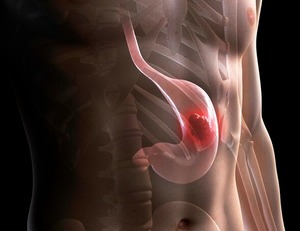
A multinational team of surgeons has reported evidence supporting a stomach-preserving procedure for certain gastric cancer patients, suggesting it may maintain quality of life without compromising safety.Researchers from Severance Hospital in Korea collaborated with colleagues at MD Anderson Cancer
A multinational team of surgeons has reported evidence supporting a stomach-preserving procedure for certain gastric cancer patients, suggesting it may maintain quality of life without compromising safety.
Researchers from Severance Hospital in Korea collaborated with colleagues at MD Anderson Cancer Center, Mayo Clinic, and Memorial Sloan Kettering Cancer Center in the United States, and Keio University Hospital in Japan to study the outcomes of proximal gastrectomy, a surgery that removes only the upper portion of the stomach affected by cancer while preserving the remaining organ.
The findings were published in the December 2025 issue of the the surgical journal Surgical Endoscopy.
The project grew out of a long-running collaboration between Professor Kim Hyoung-il, a gastrointestinal surgeon at the Severance Robot and Minimally Invasive Surgery Center, and Naruhiko Ikoma, a surgical oncologist specializing in robotic surgery at MD Anderson Cancer Center and the study’s first author.
The two surgeons have worked together on proximal gastrectomy research since 2000 and formed an international research consortium for the study.
From 2022 to 2024, the team analyzed 64 patients treated across five institutions.
Proximal gastrectomy is typically used to treat early-stage tumors that develop in the upper stomach near the esophagus. After removing the diseased portion, surgeons reconnect the esophagus to the remaining stomach, allowing patients to retain some digestive function. The approach is intended to reduce postoperative problems such as weight loss and nutritional deficiency that can follow removal of the entire stomach.
Investigators assessed outcomes using patient-reported outcomes, a measure that captures patients’ own assessments of symptoms and quality of life, including appetite, fatigue and digestive discomfort.
Researchers compared those results with outcomes from patients who underwent total gastrectomy, the standard operation in which the entire stomach is removed.
Three months after surgery, the study found no statistically significant difference in measures such as appetite loss or reflux between the two groups. The researchers reported that proximal gastrectomy appeared to provide safety outcomes comparable to total gastrectomy while showing advantages in symptoms and weight loss.
“This study represents a first step in evaluating patient satisfaction and clinical outcomes of proximal gastrectomy through collaboration among major cancer centers,” Professor Kim said, adding that he hopes the procedure will be adopted more widely for appropriate patients in Western countries.