Suspension tuning has always been a source of pride for Proton, best exemplified through the ‘Proton ride and handling’ association. Marrying a high degree of road-going performance with compliance, it’s a badge that has been …
Suspension tuning has always been a source of pride for Proton, best exemplified through the ‘Proton ride and handling’ association. Marrying a high degree of road-going performance with compliance, it’s a badge that has been worn proudly by many of its past offerings, However, that aspect has become less prominent these days, with the element almost all but invisible in marketing chatter coming off the brand. For good reason.
While products such as the new Saga MC3 still bear some hallmarks of that prowess, the level of involvement from the brand elsewhere has become less pronounced, notably with the brand’s new electrified offerings, with models such as the eMas 5 EV completely eschewing local input in terms of local suspension-related work, with the rebadged version of the Geome Xingyuan/Geely EX2 utilising a global tune from the Chinese automaker.
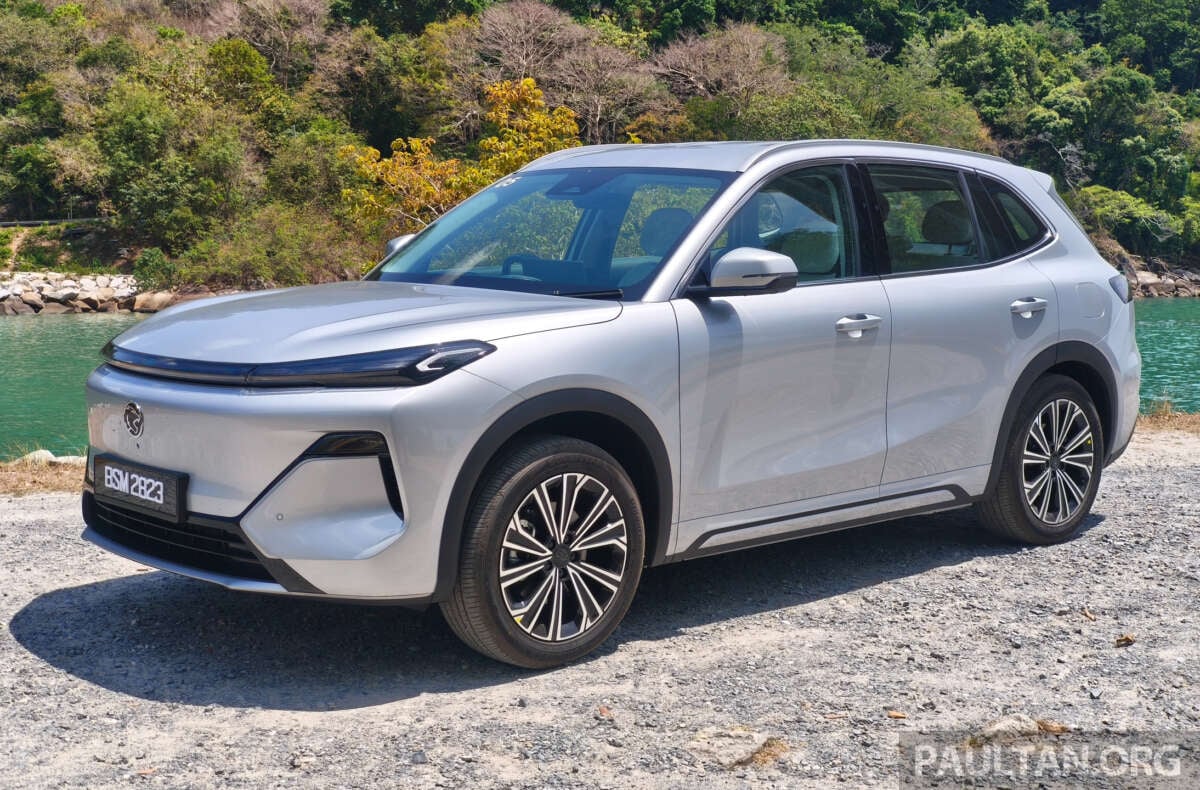
The new eMas 7 PHEV continues on that omission path, with the hybrid – which is essentially the Geely Starray EM-i (or Geely Galaxy Starship 7 in China), rebadged as a Proton – not featuring any Proton-based input for its suspension tune. This was first indicated during the static preview of the SUV, and reiterated during the Q&A session held during the media drive of the car last week.
According to assistant manager of product marketing David Tiah, Proton was not involved in the tuning of the eMas 7 PHEV’s suspension, with the SUV effectively running a global tune.
“Regarding the suspension, we did not actually do any specific alterations to it, but the development team used a system called the Virtual Chassis Calibration System. It was developed by other premium brands within the group, and now our cars are using it. What it does is it puts the vehicle set-up through multiple different real-life scenarios, virtually, going through different configurations of chassis tuning to find which is the most suitable,” he said.
That doesn’t mean that there was no feedback through evaluation from the brand’s end. “For months before the launch, we had our test cars on the road, as shown by spy shots, and during that period, our R&D team, like they do for every car, did heavy testing, running DRT (driver-related testing), quality/reliability and electrical systems testing, putting the car through its paces over thousands of kilometres, including going up Genting and along the East Coast,” he said.
“All this was so that they could truly evaluate the vehicle to make sure that it fits our roads and our conditions, so that when the car actually gets into the hands of Malaysian drivers, they know that it’s a car that they can truly enjoy driving,” he added.
With virtual tuning now supposedly able to ascertain the most suitable ride and handling for any particular vehicle, we asked if this meant that things would eventually progress towards the ‘Proton ride and handling’ philosophy being completely omitted in future Proton offerings.
The answer to that was vague, but suggests that the automaker, away from more “home-grown” products such as the Saga, will likely use suspension calibration defined elsewhere, certainly for all its rebadged models. “Regarding this question per se, I don’t have an answer for you, because these are the decisions that are made by the development team in R&D,” he said.
Proton eMas 7 PHEV Premium Plus
Proton eMas 7 PHEV Premium
AD: Drive the Proton model of your dreams. Submit your details and Proton PJ will get in touch with you.