One of the world’s most visited anatomy exhibitions is heading to Melbourne, with BODY WORLDS: The Anatomy of Happiness set to open at The District Docklands
One of the world’s most visited anatomy exhibitions is heading to Melbourne, with BODY WORLDS: The Anatomy of Happiness set to open at The District Docklands for a limited season from March.
Created by Dr Gunther von Hagens, inventor of the plastination technique, and curated by physician and designer Dr Angelina Whalley, the exhibition explores the human body through real specimens donated for scientific and educational purposes.
The Melbourne season follows successful runs in Brisbane and Perth, where the exhibition attracted nearly 140,000 visitors. Globally, BODY WORLDS has drawn more than 57 million visitors across 170 cities since debuting in 1995.
Housed at Level 1, 116 Studio Lane in Docklands, the exhibition invites visitors to “discover what lies behind the skin” and consider how lifestyle choices, emotions and environment shape both physical and mental health.
At its core are human specimens preserved using plastination, a process developed by Dr von Hagens that replaces bodily fluids with polymers, allowing tissues to be displayed in remarkable anatomical detail. According to organisers, all specimens have been willed by donors through an established body donation program for the purpose of advancing medical education and public awareness.
This edition focuses on what organisers describe as the “anatomy of happiness” – examining how emotions such as joy, love, fear and stress visibly manifest in the body and influence long-term wellbeing.
Dr Whalley said the exhibition aims to present the human body “in a memorable and beautiful way so that people can learn about anatomy, disease, and mental health,” adding that visitors often leave with renewed motivation to live more consciously.
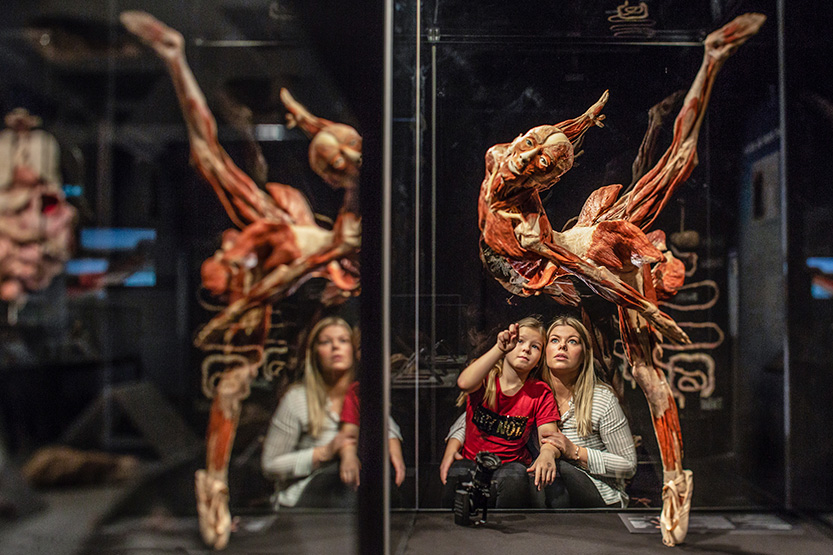
Highlights include full-body plastinates shown in motion and at rest, side-by-side displays of healthy and diseased organs, and interactive features such as the “Anatomical Mirror,” which allows guests to visualise where their own vital organs are positioned.
Other elements include a documentary photo series titled 100 Years of Life, exploring longevity and healthy ageing, as well as a “Save Your Spine” display offering ergonomic advice for everyday movement. Brain health is also a major theme, with diseases such as Parkinson’s and Alzheimer’s examined through plastinates, scans and multimedia presentations.
Organisers say surveys from previous exhibitions indicate many attendees adopt healthier habits after visiting, including improved fitness and dietary changes.
The arrival of BODY WORLDS adds to Docklands’ growing reputation as a destination for large-scale exhibitions and immersive experiences. The District has increasingly positioned itself as an events and entertainment hub, drawing visitors beyond the CBD for cultural and educational attractions. With limited sessions scheduled from March, prospective visitors are encouraged to join the online waitlist to access pre-sale ticketing.
As Melbourne audiences prepare to step inside the exhibition, organisers say the central message remains clear: the body and mind are profoundly connected and understanding that connection is the first step toward living well.